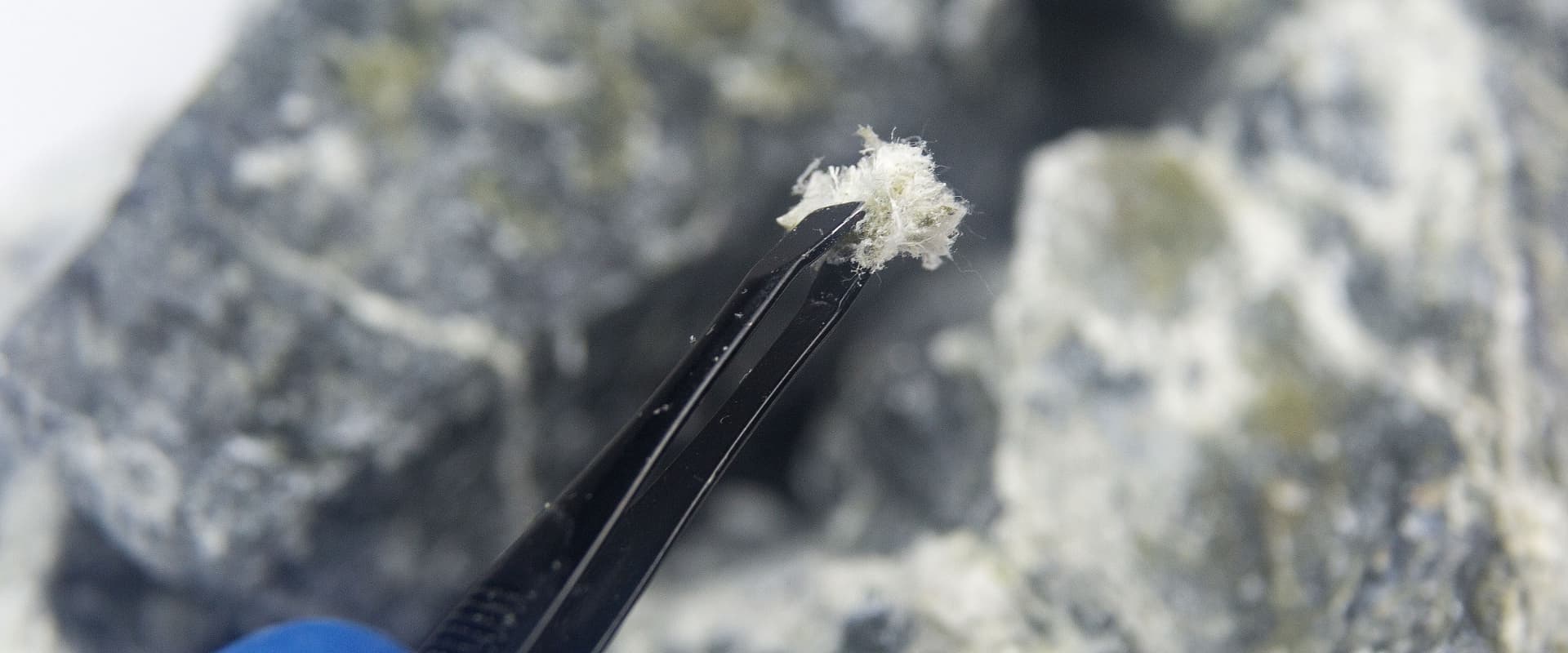
Choosing between PLM and TEM asbestos testing in Monterey, California, starts with the sample and the question you need answered. Testing a flooring material is different from measuring airborne fibers.
For your commercial facility or government property, the right method should match the inspection scope, reporting requirements, and future decisions.
Start With The Sample Type
Asbestos testing methods aren’t interchangeable. Bulk testing examines a piece of building material, while air testing examines particles collected on a filter.
A bulk result helps identify asbestos in the sampled material. An air result addresses conditions during a particular sampling period. Neither automatically answers the other question.
Your sampling plan should connect the laboratory analysis to the purpose of the investigation.
- Suspect building materials requiring identification.
- Materials with fibers that are difficult to resolve with light microscopy.
- Airborne fibers collected for an exposure assessment.
- Samples requiring analysis under a specified regulatory method.
What PLM Asbestos Testing Measures
PLM stands for polarized light microscopy. It uses light microscopy and fibers’ optical properties to identify asbestos in bulk materials. Laboratory analysts examine characteristics that help distinguish asbestos minerals from other components in the sample.
PLM asbestos testing is widely used to analyze building materials. Depending on the procedure, the report may identify asbestos types and provide an estimated percentage.
The material’s composition matters. Coatings, binders, and very fine fibers can complicate identification, so the interpretation should address sample preparation and method limitations.
What TEM Asbestos Testing Adds
TEM stands for transmission electron microscopy. It uses electrons, not visible light, to examine very small structures. Electron diffraction and elemental analysis help identify whether the structures are asbestos.
TEM asbestos testing is useful when you need finer detail or more specific fiber identification. Applicable methods exist for different sample types, including certain bulk materials and air samples.
However, requesting a “TEM test” alone doesn’t define the analysis. The laboratory needs the sample type, applicable procedure, and reporting objective. Different TEM methods have different preparation and counting rules.
When A PLM Result Needs Further Evaluation
A PLM result of “none detected” may need further review when the material contains very fine fibers or binders that interfere with identification. Floor tile is one example.
The U.S. Environmental Protection Agency notes that TEM helps identify asbestos at low concentrations and reduce false negatives in floor-tile analysis.
Before relying on the result for planned work, have your consultant review the material type and any laboratory qualifications. Additional preparation or TEM analysis may help resolve uncertainty when PLM alone doesn’t adequately characterize the sample.
Where An Asbestos Point Count Fits
An asbestos point count is a quantification procedure used with PLM. The analyst evaluates designated points on prepared microscope slides to estimate the proportion of the sample occupied by asbestos.
Point counting addresses the quantity reported. It doesn’t turn PLM into electron microscopy or eliminate the difficulty of identifying fibers below optical resolution.
A point-count request should follow the project’s analytical requirements, not serve as an automatic upgrade for every asbestos sample test.
- The reason a more structured percentage estimate is needed.
- The point-count procedure specified for the project.
- Any preparation needed for the material.
- Limitations affecting fiber identification or quantification.
How PCM Differs From PLM & TEM
PCM means phase contrast microscopy. Although people often refer to PCM as asbestos testing, the method counts fibers that meet specified criteria without identifying each counted fiber as asbestos.
That distinction matters for asbestos air quality testing. A PCM fiber count may include non-asbestos fibers, and certain thin fibers fall below its resolution.
NIOSH Method 7400 addresses asbestos and other fibers by PCM. Method 7402 uses TEM to determine the asbestos fraction of fibers evaluated in conjunction with the PCM method. Interpret these results within the applicable sampling and analytical framework.
Match The Analysis To Your Project
Your test method should follow the decision you need to make. A pre-renovation material survey, an occupational exposure assessment, and an investigation of an uncertain laboratory result have different objectives.
For Monterey property owners and facility managers, applicable requirements may involve federal, California, and local rules. A method accepted for one purpose may not be sufficient for another.
An environmental consultant should establish the scope before asbestos samples reach the laboratory.
- The material or environment being evaluated.
- The planned work and areas it will affect.
- Applicable sampling and analytical requirements.
- The sensitivity and reporting detail needed.
- The deadline for receiving and reviewing results.
Read The Findings Within Their Limits
“None detected” means the analysis didn’t identify asbestos under the method and conditions used. Don’t treat it as an unlimited statement about every material in your building.
Likewise, a bulk-material percentage and an airborne concentration describe different measurements. Comparing them directly won’t establish exposure or overall building conditions.
Your report should give you enough context to understand what was tested and what the findings support.
- Sample identifiers and collection locations.
- The analytical method used for each sample.
- Results, units, and relevant reporting limits.
- Qualifications or interferences noted by the laboratory.
- Recommendations for additional evaluation where warranted.
Get A Testing Plan For Your Property
PLM, TEM, and PCM each serve a defined role. Choosing the appropriate method starts with a sound inspection and sampling plan, followed by interpretation that connects the findings to your project.
M3 Environmental LLC provides asbestos inspection, testing, and environmental consulting services in Monterey, California. Contact us to discuss your property, planned work, and reporting needs, so your testing scope addresses the questions you need answered